
Documentation & Research
Traditional Knowledge Associated with Natural Lacquer Sap Material Practices and Biocultural Heritage in China
A public educational resource prepared by the World Intangible Cultural Heritage Federation (WICHF).
Project snapshot
Project snapshot
- Project type
- Public educational resource
- Status
- Status not publicly confirmed
- Location
- China
- WICHF role
- WICHF prepared this public educational resource.
- Prepared by
- World Intangible Cultural Heritage Federation (WICHF)
- Coverage
- China
- Resource type
- Public educational resource / website-linked resource
- Primary purpose
- Awareness-raising, guidance, and non-commercial learning
- Audience
- Civil society organizations, researchers, cultural practitioners, and the public
- Publication month
- March 2026
- Companion file
- WICHF Natural Lacquer Sap Resource (English PDF)
Project content
A public educational resource prepared by the World Intangible Cultural Heritage Federation (WICHF).
Public companion to the VLR PDF
This resource introduces traditional knowledge associated with natural lacquer sap in China, including the botanical source of raw lacquer, basic material properties, harvesting and processing practices, selected tools and craft techniques, and the relationship between lacquer practices and biocultural heritage.
It is designed as a public educational and awareness-raising resource for civil society organizations, researchers, cultural practitioners and the general public. The page provides an accessible introduction to lacquer as a plant-based material practice rather than as a purely decorative or commercial subject.
- Audience Civil society organizations, researchers, cultural practitioners, and the public
- Publication month March 2026
- Companion file WICHF Natural Lacquer Sap Resource (English PDF)
Natural lacquer belongs to wider knowledge systems
Natural lacquer is not only a medium of artistic and craft practice. It is also a plant-derived material whose use depends on accumulated knowledge related to harvesting, preparation, handling, environmental conditions and workshop traditions.
This makes lacquer practice relevant to wider discussions about traditional knowledge, plant-based materials, cultural transmission and biocultural heritage. WICHF presents this resource to help make these relationships more visible, more understandable and more accessible to non-specialist readers.
What readers learn on this page
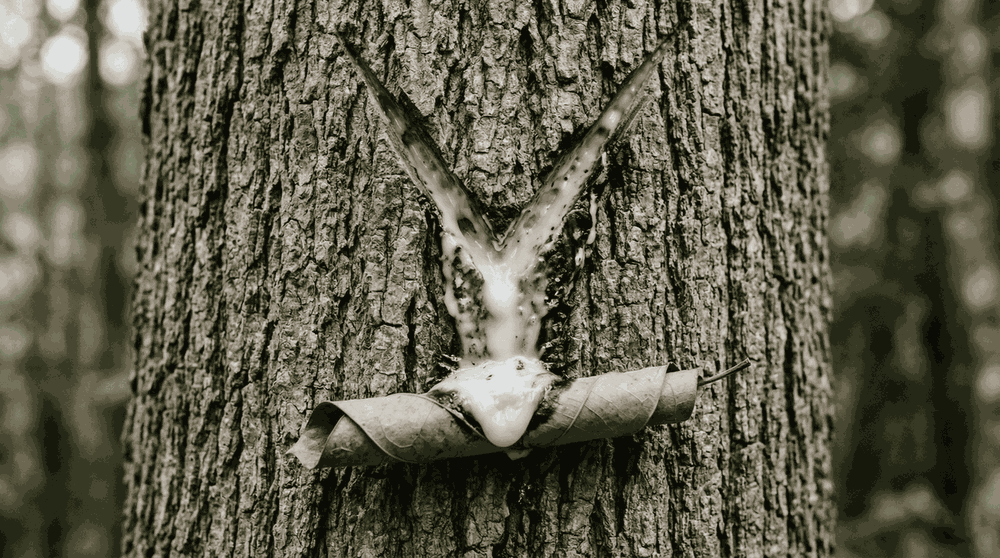
Natural lacquer used in Chinese lacquer practices derives from the sap of lacquer trees. In this resource, lacquer is presented first as a living plant-based material before it is discussed as a medium for craft and decorative practice.
This distinction is important. The page should not read like a general art catalogue. It should read as a knowledge resource concerning a plant-based material, associated traditional practices and the wider biocultural setting in which such practices are transmitted.
The body of knowledge associated with natural lacquer includes practical understanding of where lacquer trees grow, how raw lacquer behaves, how it is filtered and refined, how tools are selected and used, and how environmental conditions influence workshop processes.
These forms of knowledge are part of a traditional material culture. They connect natural source material, technical judgement, teaching practice, embodied skill and intergenerational transmission.
Harvesting, processing, and workshop methods
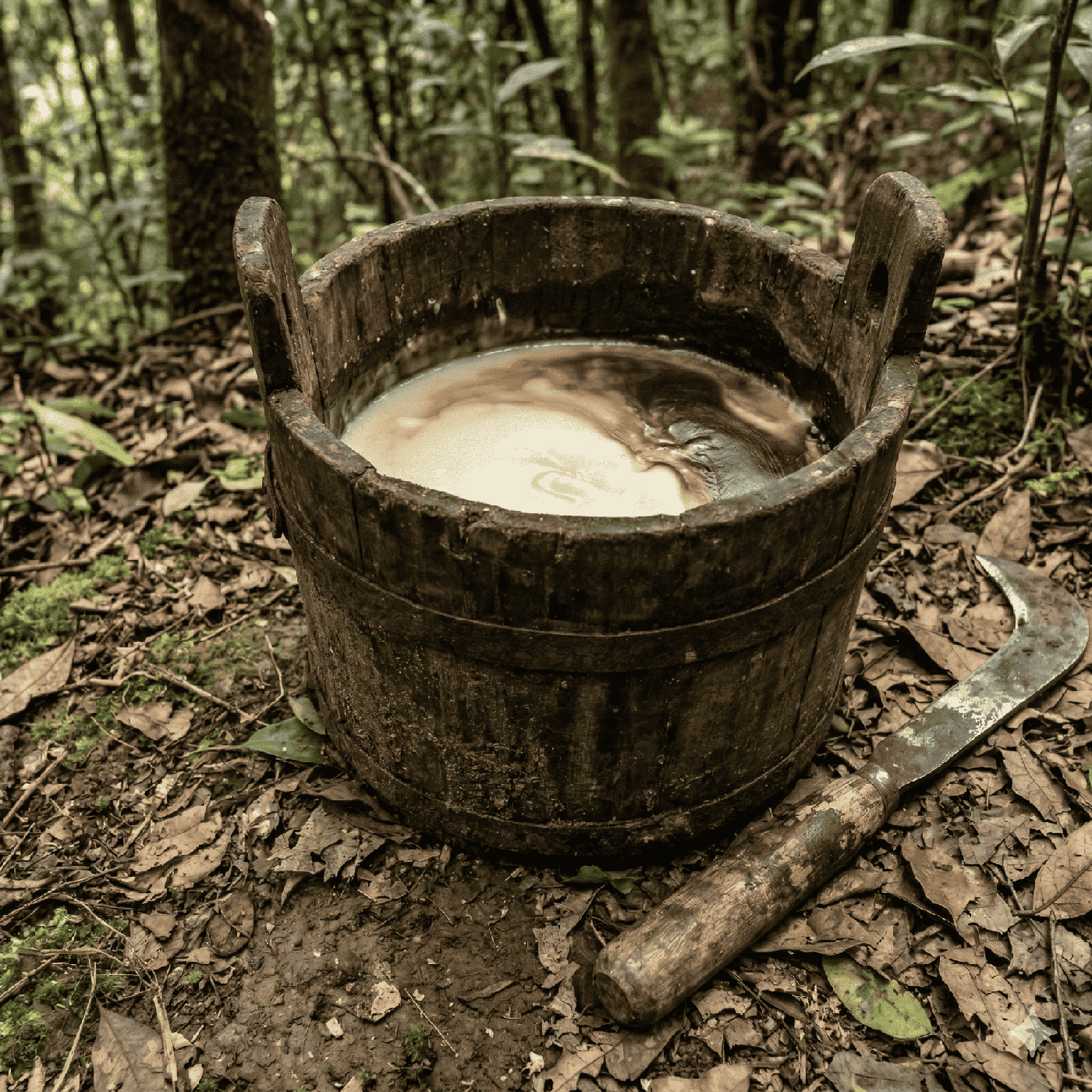
The resource explains, in introductory form, that lacquer sap is collected from lacquer trees through careful tapping over time, and that handling the sap involves judgement about timing, tree condition, climatic conditions, filtering and preparation.
The goal is not to provide a full technical manual. The goal is to demonstrate that these practices are part of a traditional knowledge chain situated at the interface between biological source material and cultural practice.
The page introduces selected tools and working methods associated with lacquer practice, such as scraping, brushing, sanding, inlay-related tools and powdered-material tools, as well as selected decorative processes.
These techniques are not presented as exhaustive workshop instructions. They are presented as examples of how material knowledge, hand skills and workshop traditions are linked in lacquer practice.
Why lacquer practice matters beyond craft display
Lacquer practice can be understood as part of biocultural heritage because it brings together plant-based material knowledge, practical skills, local experience, workshop tradition, transmission through teaching and the cultural meanings attached to finished works.
The educational purpose of this page is therefore twofold: first, to introduce lacquer as a plant-derived material practice; second, to highlight why traditional knowledge should be approached with respect, careful documentation and awareness of community participation and benefit-sharing principles.
Accessible to non-specialist readers
This resource is intended for civil society organizations, researchers, cultural practitioners and the general public. It is suitable for awareness-raising, introductory teaching, public communication and non-commercial learning.
It should be readable by non-specialist users. Avoid overly technical paragraphs, unexplained specialist vocabulary and workshop-language that assumes professional training.
Use this resource with care and clarity
This public resource is provided for educational and non-commercial use. It is not a legal opinion and it should not be understood as a claim of ownership over traditional knowledge held by communities or practitioners.
Any future use beyond educational and non-commercial purposes should respect applicable laws, community participation and fair and equitable benefit-sharing.
This page is independently prepared by World Intangible Cultural Heritage Federation (WICHF). Unless otherwise stated in writing, it should not be interpreted as an official publication, endorsement, authorization, or legal opinion of the Convention on Biological Diversity (CBD), the Nagoya Protocol, or the Access and Benefit-Sharing Clearing-House (ABSCH).
Stable public access to the companion PDF
Download the PDF resource: WICHF Natural Lacquer Sap Resource (English PDF) .
The downloadable file is kept visible on-page and is not hidden behind login, pop-up registration or a temporary preview address.
Lead entity and collaboration note
World Intangible Cultural Heritage Federation (WICHF) is the lead entity of this resource. WICHF works on cultural heritage communication, knowledge organization and international-facing public-interest projects related to intangible cultural heritage and broader heritage-linked development themes.
For institutional dialogue, educational collaboration or resource-related communication, visitors should be directed to WICHF's official website contact channel. Do not infer personal names, direct personal phone numbers, partnership claims or expert committee names unless WICHF separately confirms them.
Publication month: March 2026. This project route serves as the stable public web companion to the PDF resource.
Relationship
Relationship
WICHF prepared this public educational resource.
Current project page: Prepared by and Publication month fields.
Downloads and resources
Downloads and resources
Official references
Official references
Contact
Interested in working together?
Explore collaboration through verified WICHF contact channels.