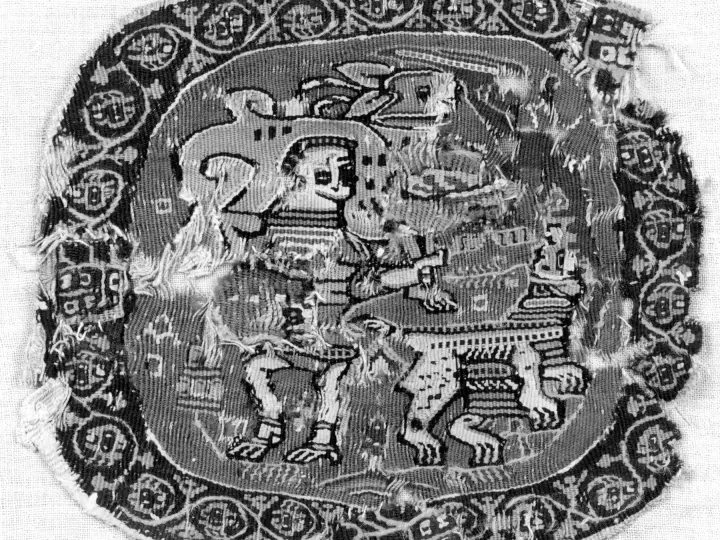
The Lost Sheep (?)
5th–8th century (Late Antique)
The Walters Art Museum
A Coptic tapestry fragment from Egypt, woven in wool and linen. Its figured design and border preserve late antique textile practice in compact form.
View object
9 view object
A governed exhibition of open-access museum objects connected through living-heritage themes.
5th–8th century (Late Antique)
The Walters Art Museum
A Coptic tapestry fragment from Egypt, woven in wool and linen. Its figured design and border preserve late antique textile practice in compact form.
View object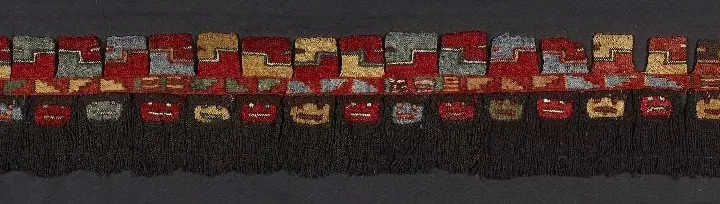
100-200 CE
The Walters Art Museum
A Nazca textile border with three-dimensional figures and stem-stitch embroidery. It concentrates technical invention along the edge of a garment or hanging.
View object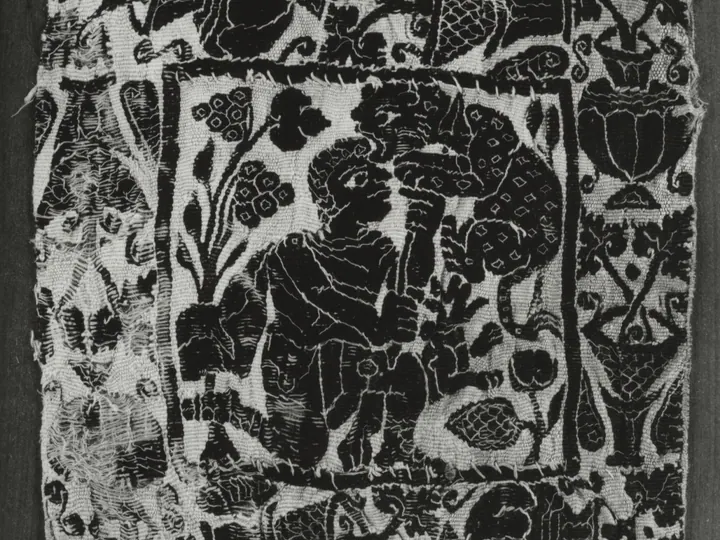
4th-5th century (Early Byzantine)
The Walters Art Museum
An early Byzantine textile ornament from Egypt. Hunt imagery and woven ornament link dress, decoration, and symbolic motifs in a small format.
View object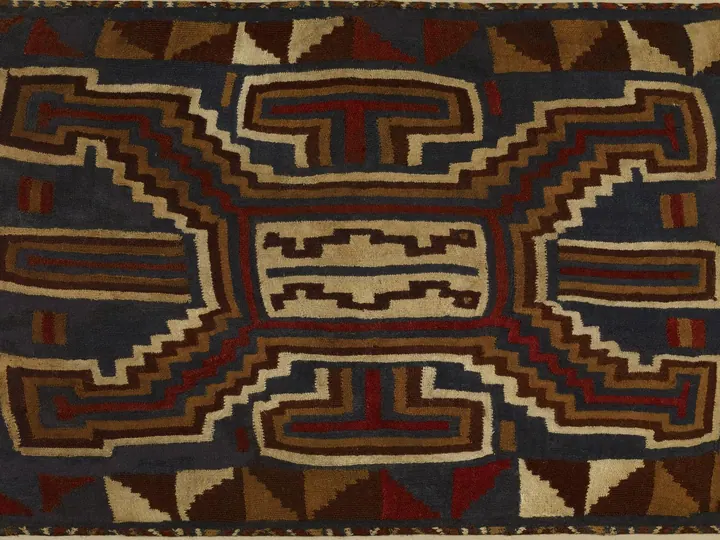
100 BCE-300 CE
The Walters Art Museum
A Sihuas textile panel from Peru made in camelid fibers. Its abstract deity and geometric format show Andean weaving as a carrier of symbolic knowledge.
View object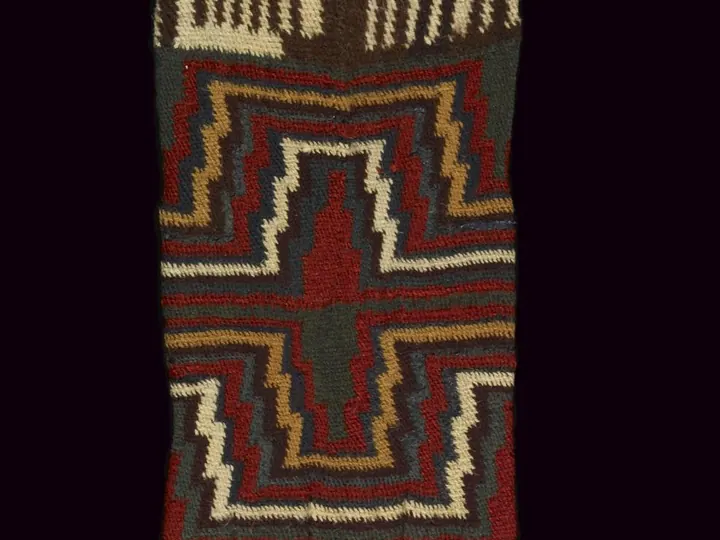
100 BCE-300 CE
The Walters Art Museum
A large woven bag from the Sihuas culture of Peru. Its geometric design suggests both practical use and the visual communication of identity.
View object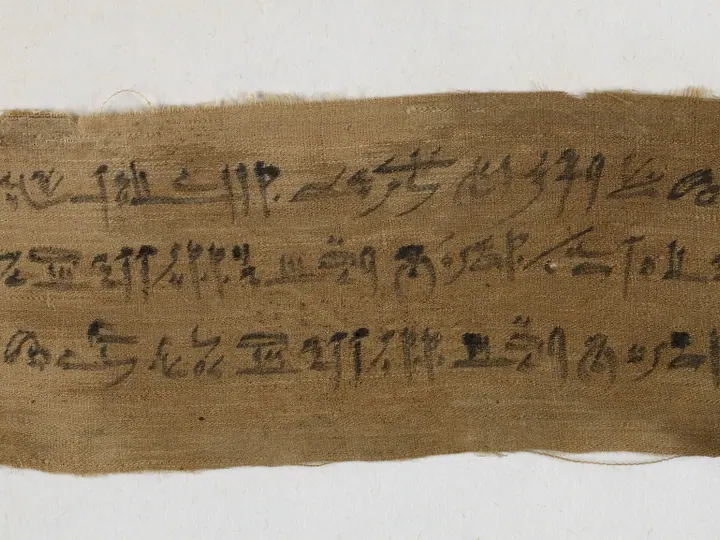
ca. 399-343 BCE (Late Period, 29th-30th dynasty)
The Walters Art Museum
An inscribed linen bandage from Late Period Egypt. Its material and text connect textile production with funerary ritual and protective belief.
View object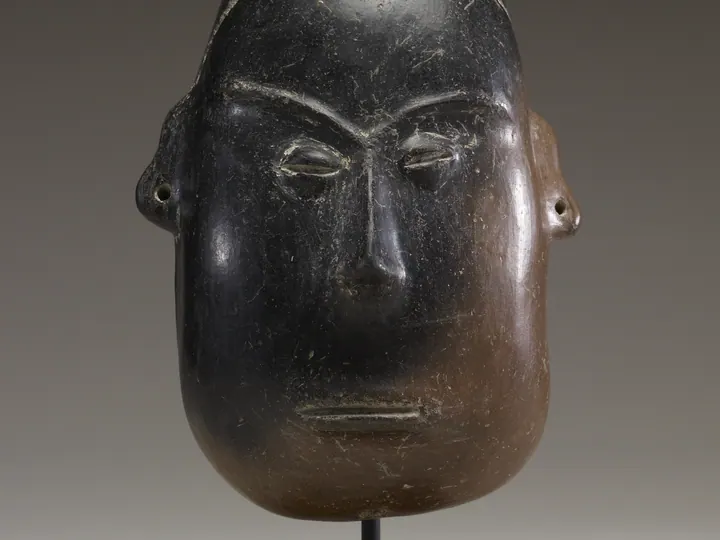
300 BC-AD 300 (Late Pre-Classic)
The Walters Art Museum
A ceramic mask from Colima, Mexico. Its form places mask-making within ancient ritual and funerary traditions of Mesoamerica.
View object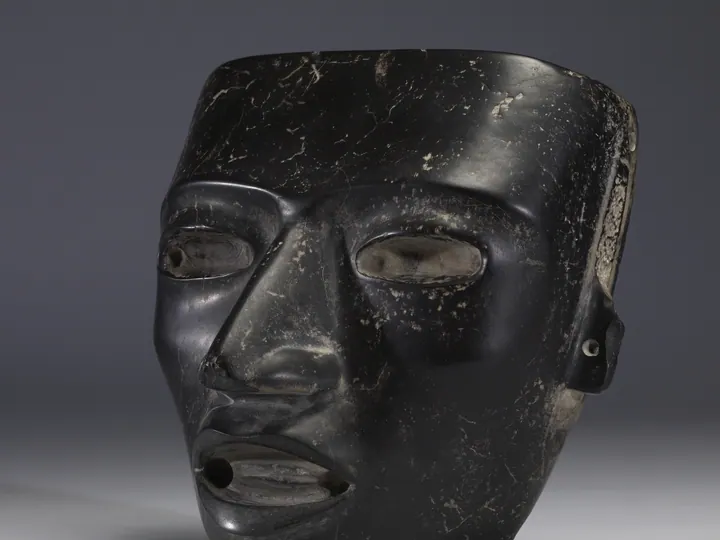
AD 250-600 (Early Classic)
The Walters Art Museum
A limestone face plaque from Teotihuacán. Drill holes and inlay settings suggest attachment to an effigy or funerary bundle rather than live wear.
View object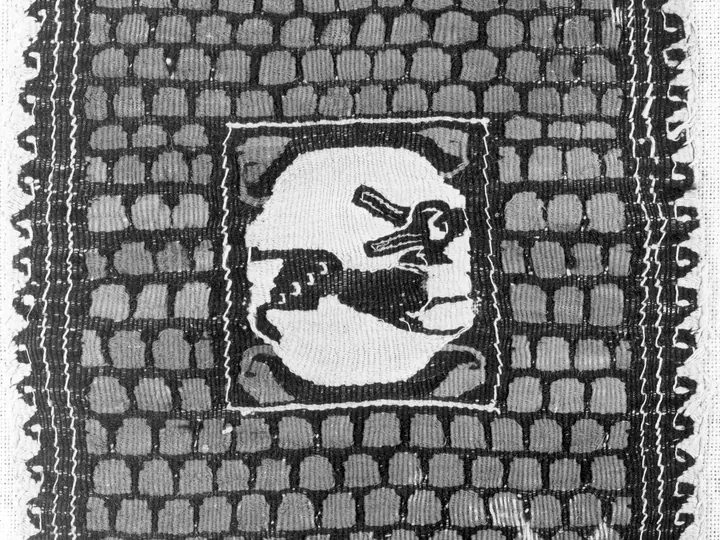
5th–6th century
The Walters Art Museum
A tapestry-woven roundel with a hare motif, made in Egypt between the 5th and 6th centuries. It shows how small textile units could carry durable decorative language.
View object