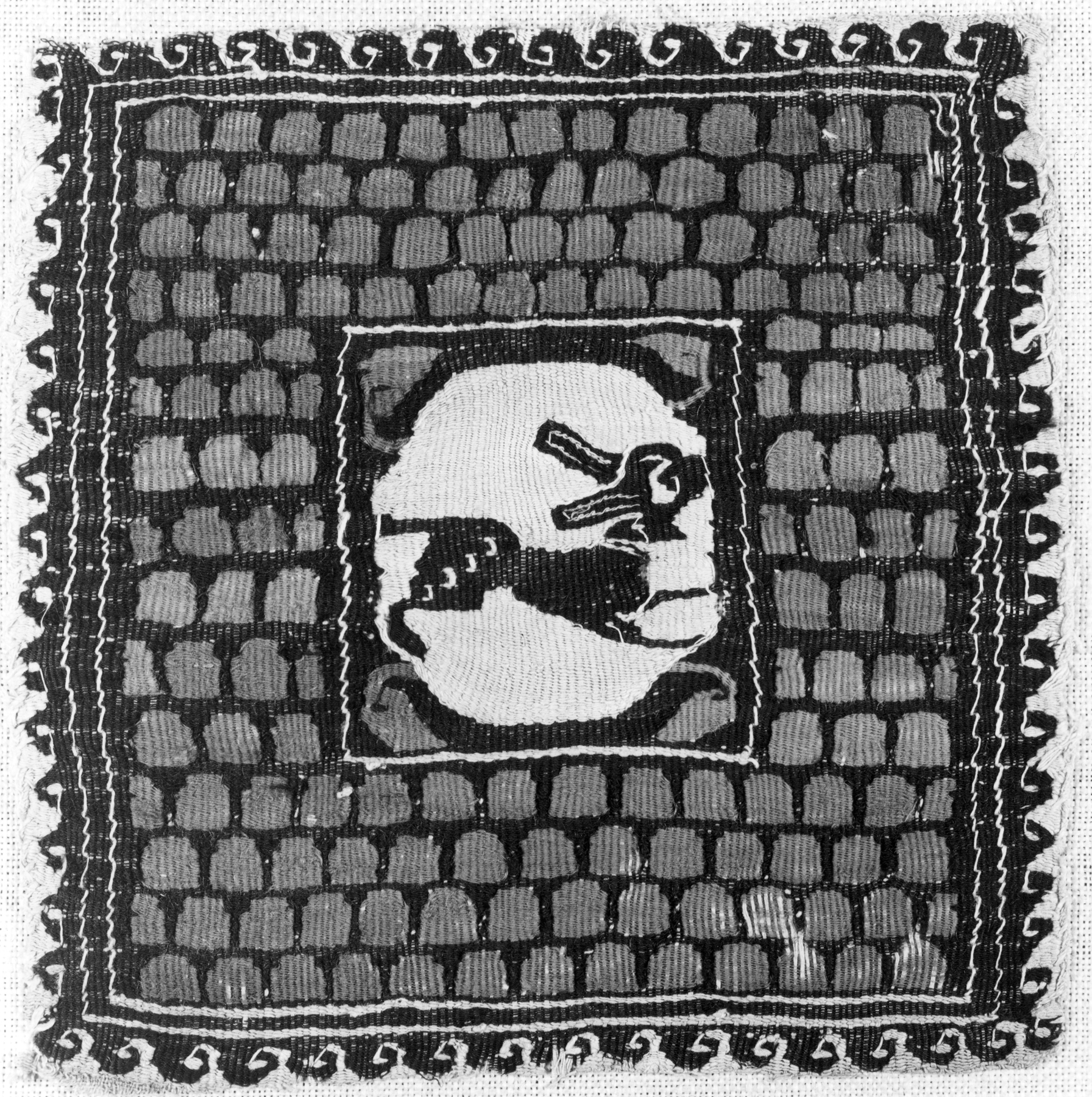
A tapestry-woven roundel with a hare motif, made in Egypt between the 5th and 6th centuries. It shows how small textile units could carry durable decorative language.
Roundels such as this once functioned within larger textile contexts. The object is valuable not only for its animal motif but for the disciplined weaving required to produce a clear, compact decorative field.
The work is strongly relevant to craft heritage because it preserves a repeatable decorative textile unit and the weaving knowledge behind it.