
Documentation & Research
Tibetan Living Heritage Documentation, Transmission and Youth Capacity Initiative
A public-interest initiative led by the World Intangible Cultural Heritage Federation (WICHF).
Project snapshot
Project snapshot
- Project type
- Documentation and youth capacity initiative
- Status
- Status not publicly confirmed
- Location
- Xigazê, Tibet Autonomous Region, China
- WICHF role
- WICHF is identified as the lead entity.
- Lead entity
- World Intangible Cultural Heritage Federation (WICHF)
- Public focus
- documentation, interpretation, education and transmission support
- Initial implementation focus
- Xigazê, Tibet Autonomous Region, China
- Core themes
- living heritage; community-based transmission; youth capacity-building; digital documentation; public education; ethical public visibility
- Lead entity
- World Intangible Cultural Heritage Federation (WICHF)
- Initial implementation focus
- Xigazê, Tibet Autonomous Region, China

Project content
A public-interest initiative led by the World Intangible Cultural Heritage Federation (WICHF).
Project overview
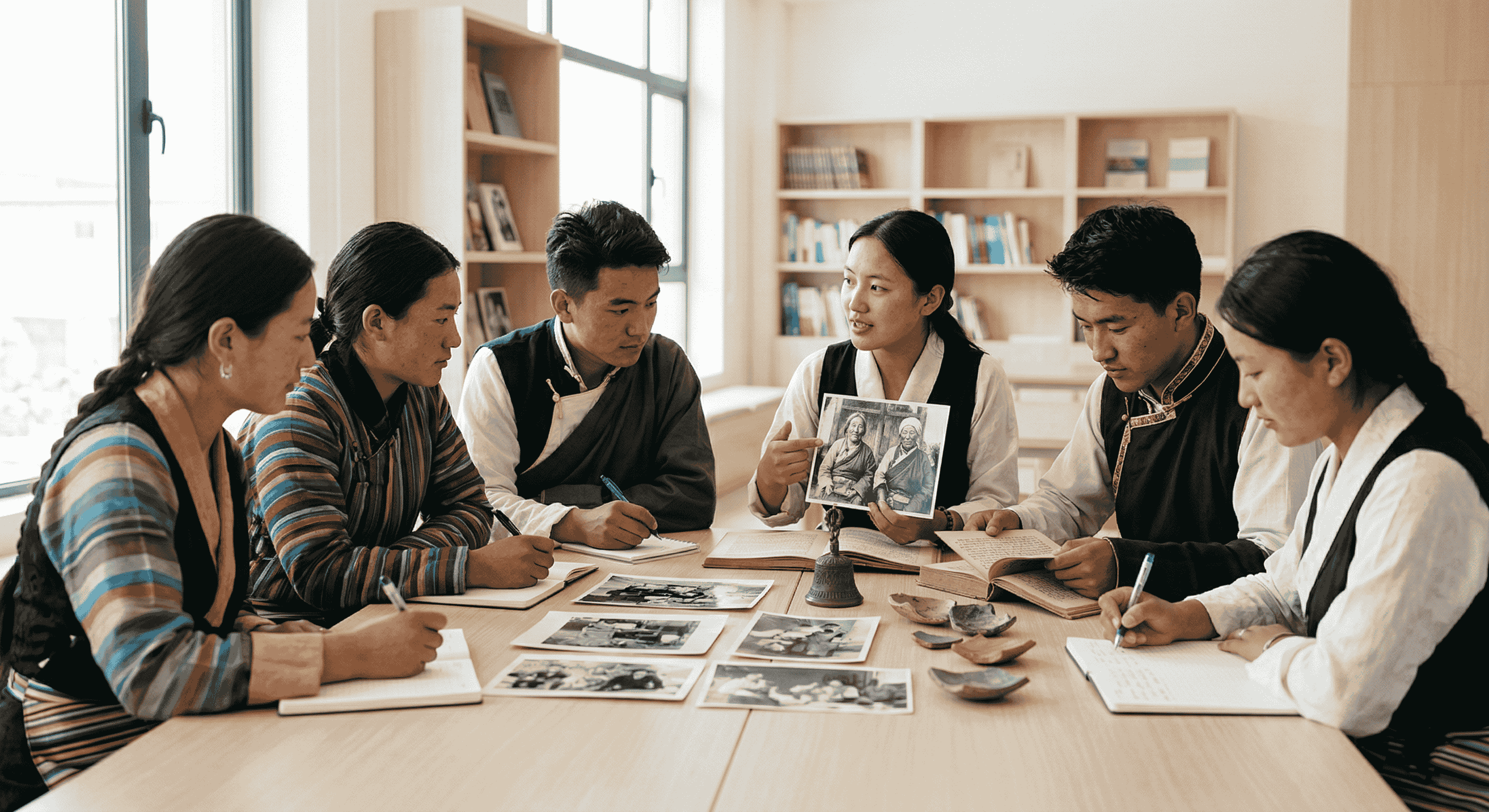
The Tibetan Living Heritage Documentation, Transmission and Youth Capacity Initiative is a public-interest initiative led by the World Intangible Cultural Heritage Federation (WICHF). The initiative is designed to document, interpret and support the community-based transmission of selected Tibetan living heritage practices in China through bilingual digital publication, youth capacity-building, public education and ethically framed cultural visibility.
The initiative is structured as a stable, publicly accessible project framework intended to show what the initiative is, why it matters, how it will be carried out, and what public-facing outputs it plans to deliver over time.
- Lead entity World Intangible Cultural Heritage Federation (WICHF)
- Initial implementation focus Xigazê, Tibet Autonomous Region, China

Why this initiative matters
Living heritage is not preserved by rhetoric alone. It remains meaningful when knowledge, practice, memory, craft, performance, community participation and intergenerational transmission continue to function in real social life.
In many heritage contexts, pressures such as fragmented documentation, limited public access to reliable explanatory materials, uneven visibility for practitioners, and limited youth participation can weaken long-term continuity. WICHF proposes this initiative to create a clearer public-facing structure for documentation, interpretation, transmission support and educational outreach related to selected Tibetan living heritage practices in China.

Project objectives
- To document selected examples of Tibetan living heritage practices, practitioners, workshops, community knowledge and related cultural materials in a clear and publicly understandable way.
- To support community-based transmission through educational framing, youth capacity-building and ethically presented digital interpretation.
- To build bilingual public-facing project pages, case entries and explanatory materials that improve access, understanding and long-term visibility.
- To encourage respectful dialogue among heritage practitioners, educators, youth, researchers and community knowledge holders where appropriate.
Scope of safeguarding
This initiative may cover selected areas such as craft knowledge, oral memory, community-based cultural practices, performance-related traditions, material culture, practitioner stories, and locally grounded knowledge connected with heritage continuity.
The initiative does not claim to represent all Tibetan culture. It focuses on selected, clearly framed cases that can be documented and presented responsibly, with attention to context, consent, clarity and public educational value.
Beneficiaries
Primary beneficiaries include practitioners, workshop-based culture bearers, local youth participants, educators, heritage workers and relevant community-facing collaborators.
Secondary beneficiaries include researchers, public-interest institutions, cultural audiences and the broader public seeking reliable, accessible and non-sensational information about living heritage in China.
How the project works
The initiative will be developed through a combination of practitioner documentation, editorial structuring, bilingual publication, youth-oriented capacity-building and public-interest communication.
WICHF will coordinate the project structure, content planning, editorial review, bilingual publication and website-based public presentation. Depending on topic and feasibility, the project may also include learning sessions, invited educational activities, practitioner profiles, workshop documentation, public case pages and periodic project updates.
Public deliverables
WICHF plans to build the initiative through the following public-facing outputs:
- One stable bilingual project page on the WICHF website.
- A first group of selected practitioner, workshop or heritage case entries presented in a clear and publicly understandable format.
- Public-facing explanatory content on practice context, transmission, materials, techniques and community relevance where appropriate.
- Youth-oriented learning and communication materials related to heritage documentation, interpretation and responsible public storytelling.
- A small number of public project updates or dialogue-based content releases as the initiative progresses.
First-year milestones and timeline
- Month 1–2 Project framing, editorial structure and page launch preparation.
- Month 3–4 Launch of the bilingual core project pages and initial public overview content.
- Month 4–8 First round of practitioner or workshop documentation and public case-page development.
- Month 6–10 Initial youth-oriented learning or communication-support activities, depending on implementation conditions.
- Month 9–12 Publication of first progress updates and first-year public review of outputs.
Governance and roles
Lead entity: World Intangible Cultural Heritage Federation (WICHF).
WICHF is responsible for overall project framing, content planning, editorial review, bilingual publication and public-facing website management.
Where relevant and feasible, the initiative may work with educators, local participants, researchers, culture practitioners and community-facing contributors. Contributor relationships will be presented through WICHF's regular public communication channels when they are confirmed through institutional review.
Ethics and compliance principles
WICHF follows a factual, restrained and respectful approach in the public presentation of this initiative. Where practitioner names, community materials, workshop documentation, images or other identifiable materials are involved, publication should be based on appropriate authorization, contextual accuracy and respect for intellectual property and community dignity.
This initiative is independently organized by WICHF. Its current public presentation is focused on documentation, interpretation, education and transmission support, and related materials may be expanded as the project develops.
About the lead entity
The World Intangible Cultural Heritage Federation (WICHF) is the lead entity of this initiative. WICHF works on public-interest communication, knowledge organization and international-facing heritage-related project development.
Official website: https://wichf.org/
About WICHF: https://wichf.org/en/about
Contact / collaboration note
For institutional dialogue, educational exchange or public-interest collaboration related to this initiative, visitors should be directed to WICHF's existing official contact channel on the website.
Official project communication should use WICHF's public contact route so institutional dialogue, educational exchange and public-interest collaboration can remain connected to the organization's published channels.
Project Updates
Future public progress notes, case-page releases and resource updates will be published here.
Relationship
Relationship
WICHF is identified as the lead entity.
Current project page: Lead entity and Initial implementation focus fields.
Contact
Contact about this project
Use the verified methods below for enquiries about this project.
Official references
Official references
Contact
Interested in working together?
Explore collaboration through verified WICHF contact channels.